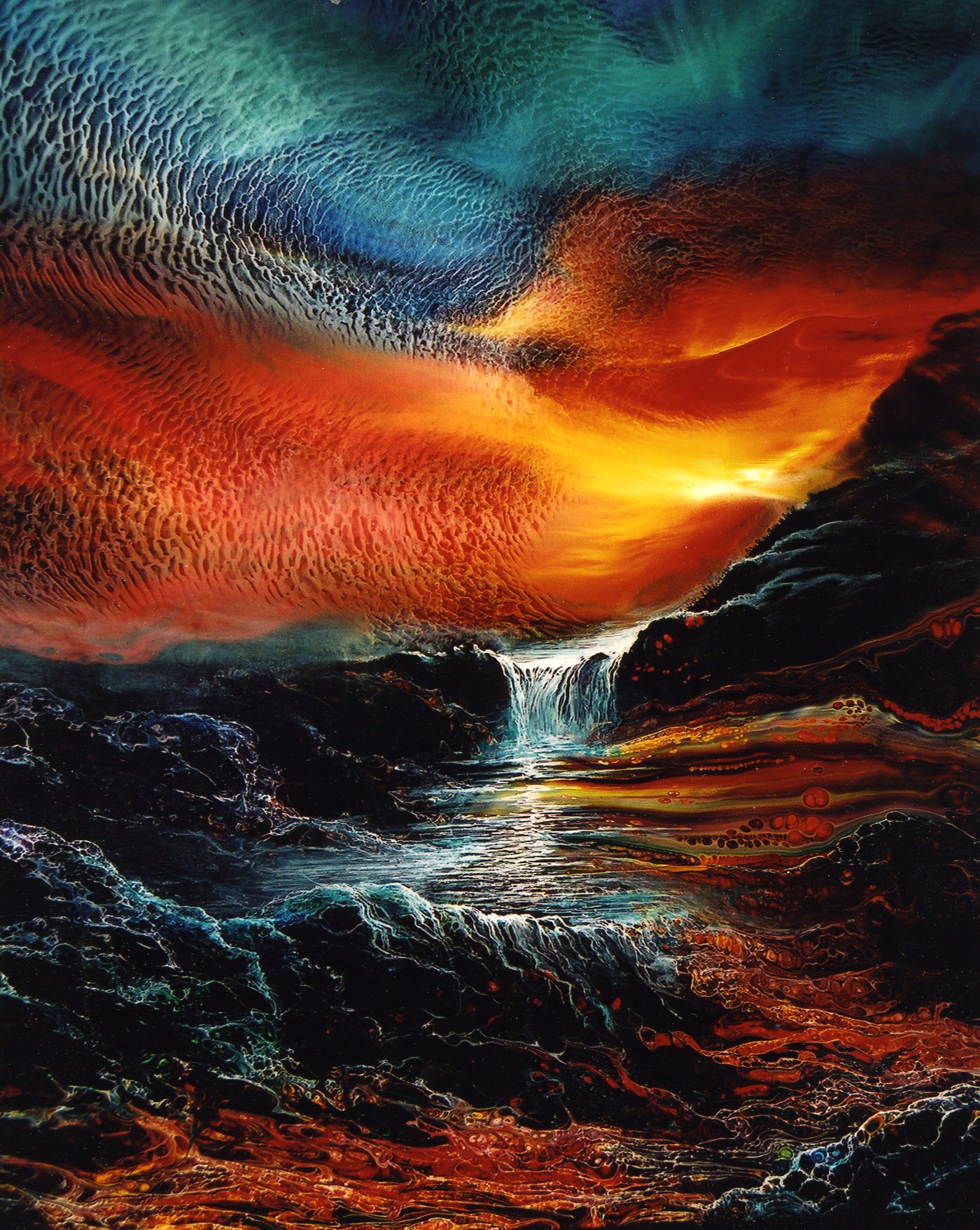
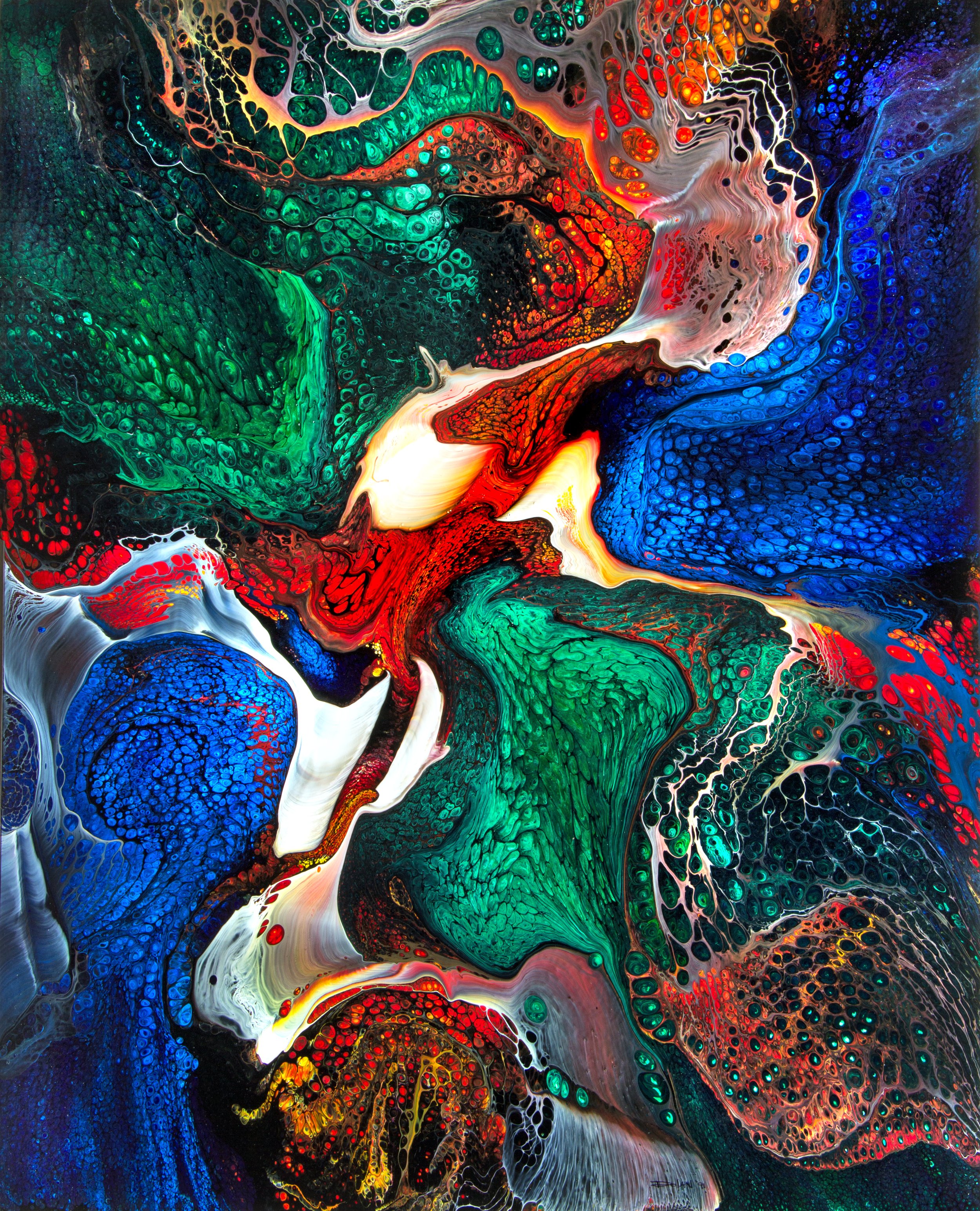
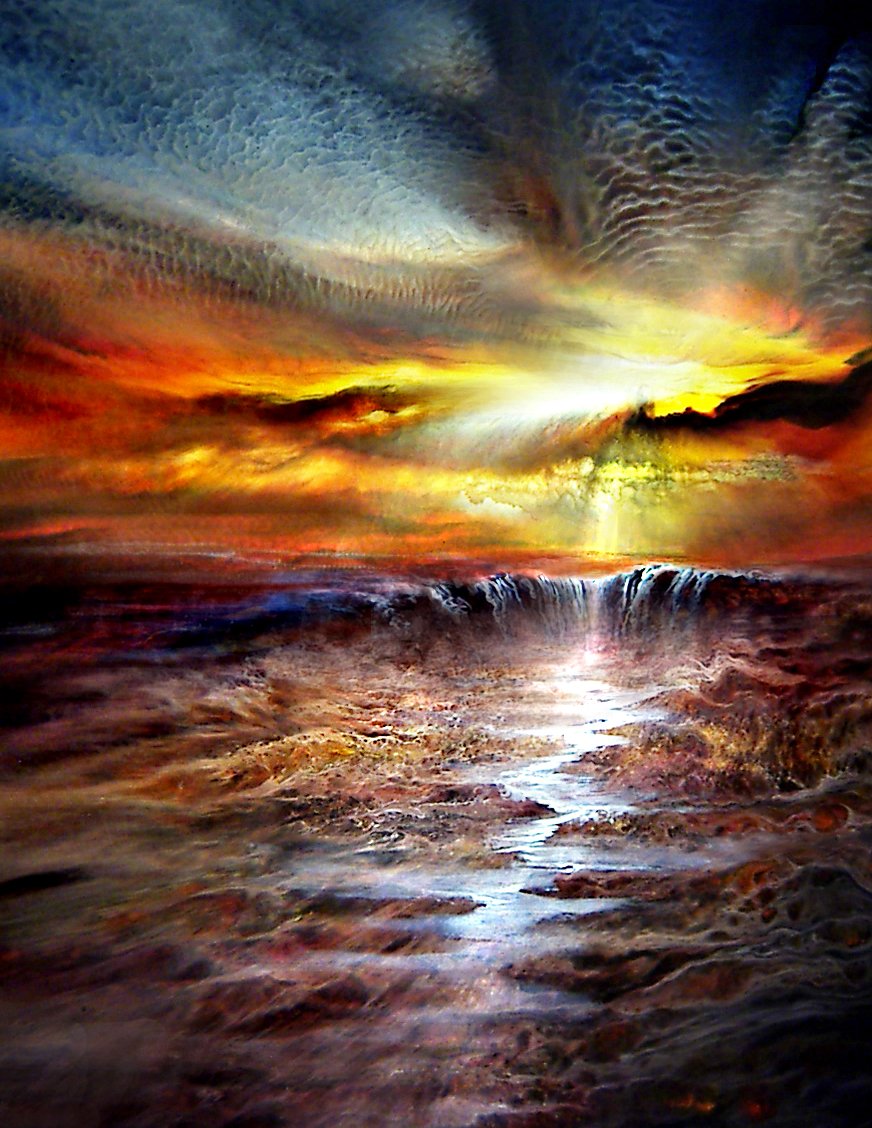
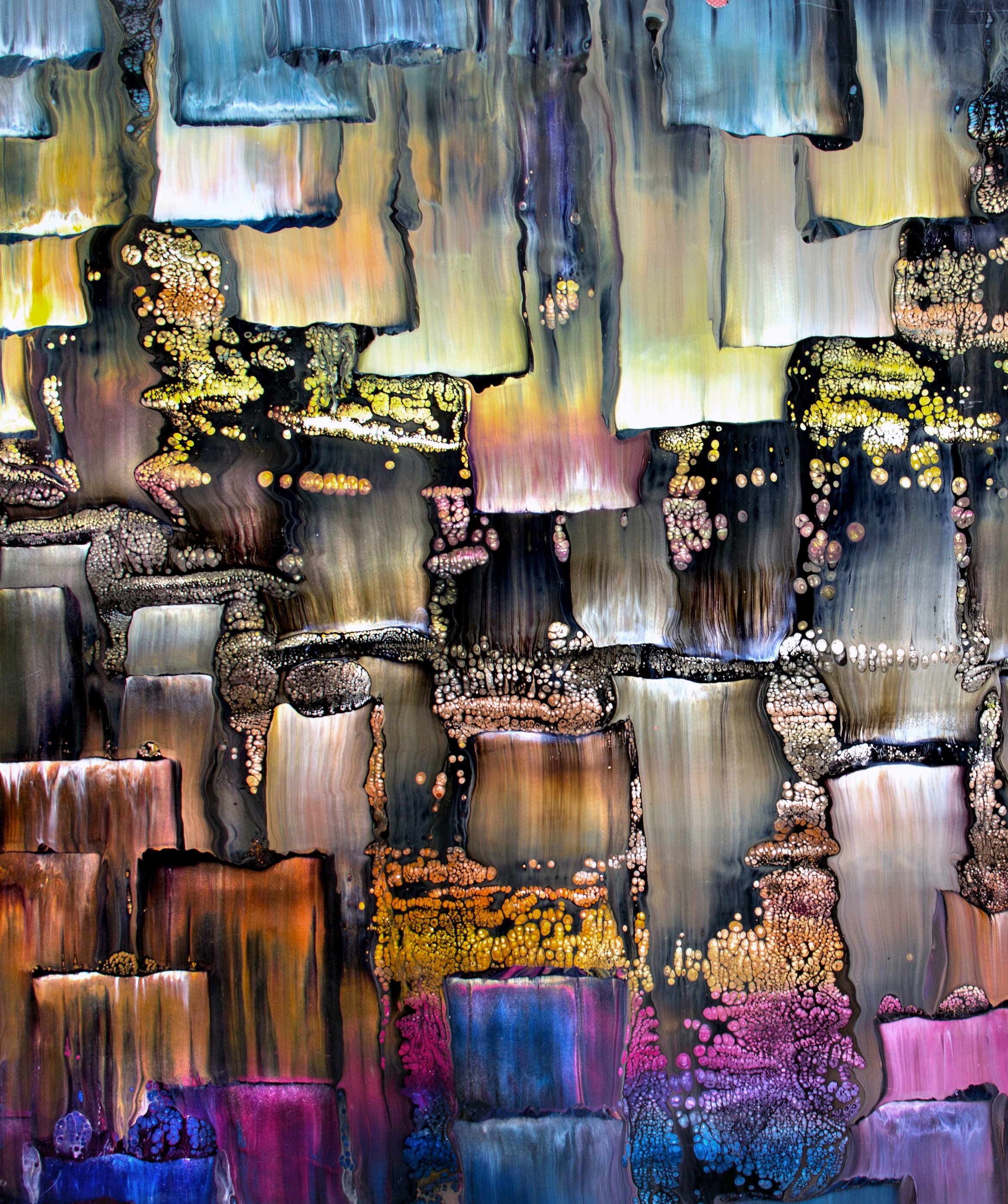
“A historically unique, non-reproducible body of work from a lost medium”
Nitrocellulose lacquer paintings (1984-2009)
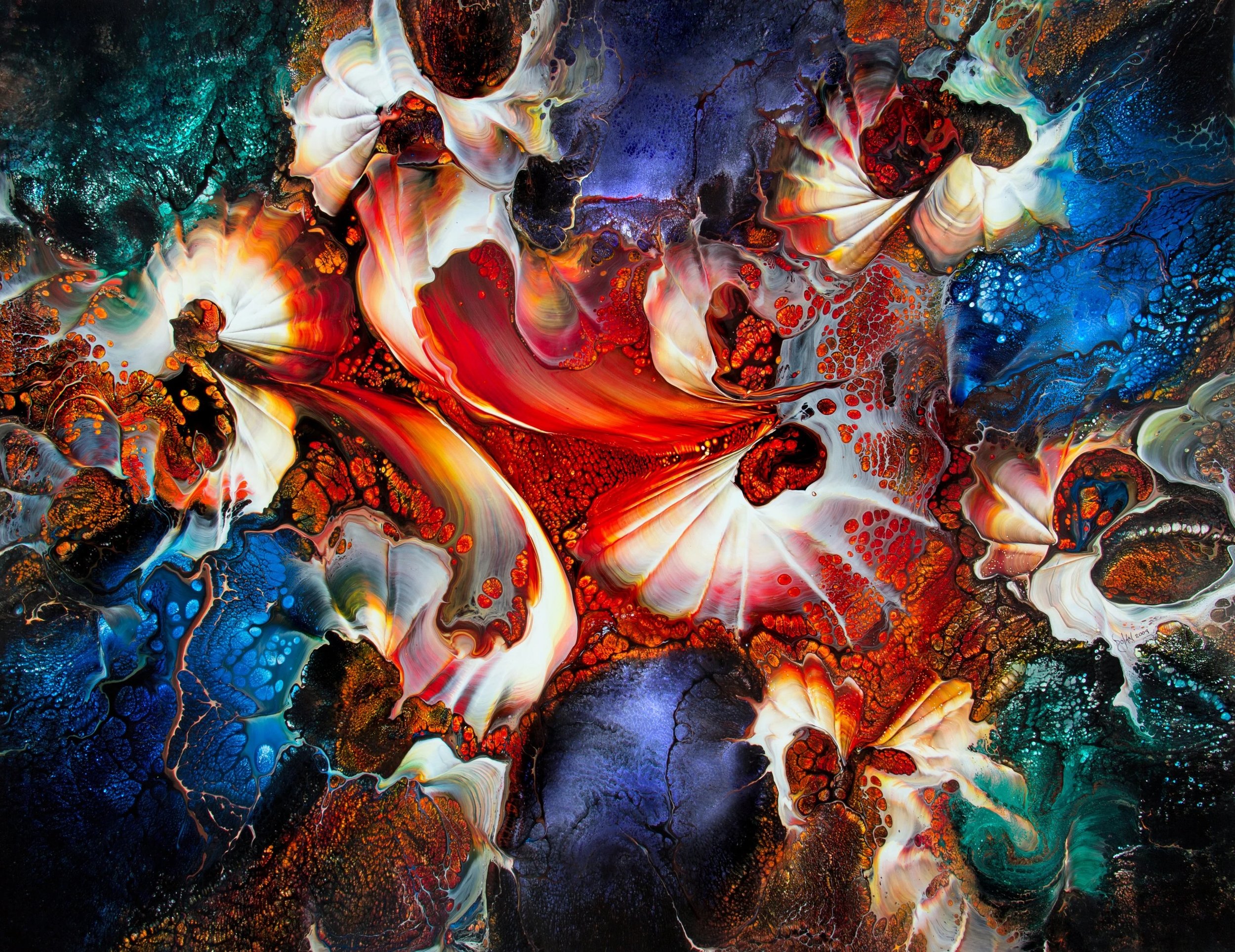
David Dolan is an American artist best known for his pioneering work with a formulation of nitrocellulose lacquer that is no longer available.
After environmental regulations changed the chemical formulation of lacquer in 1998, the exact materials used were no longer available, making his original technique effectively a “Lost Medium.”
His body of work occupies unclaimed unique territory in the world of art.
He worked in isolation without influence or reference from 1985 until 2009.
The remarkable properties of his work became noticed by collectors and has been shipped around the world.
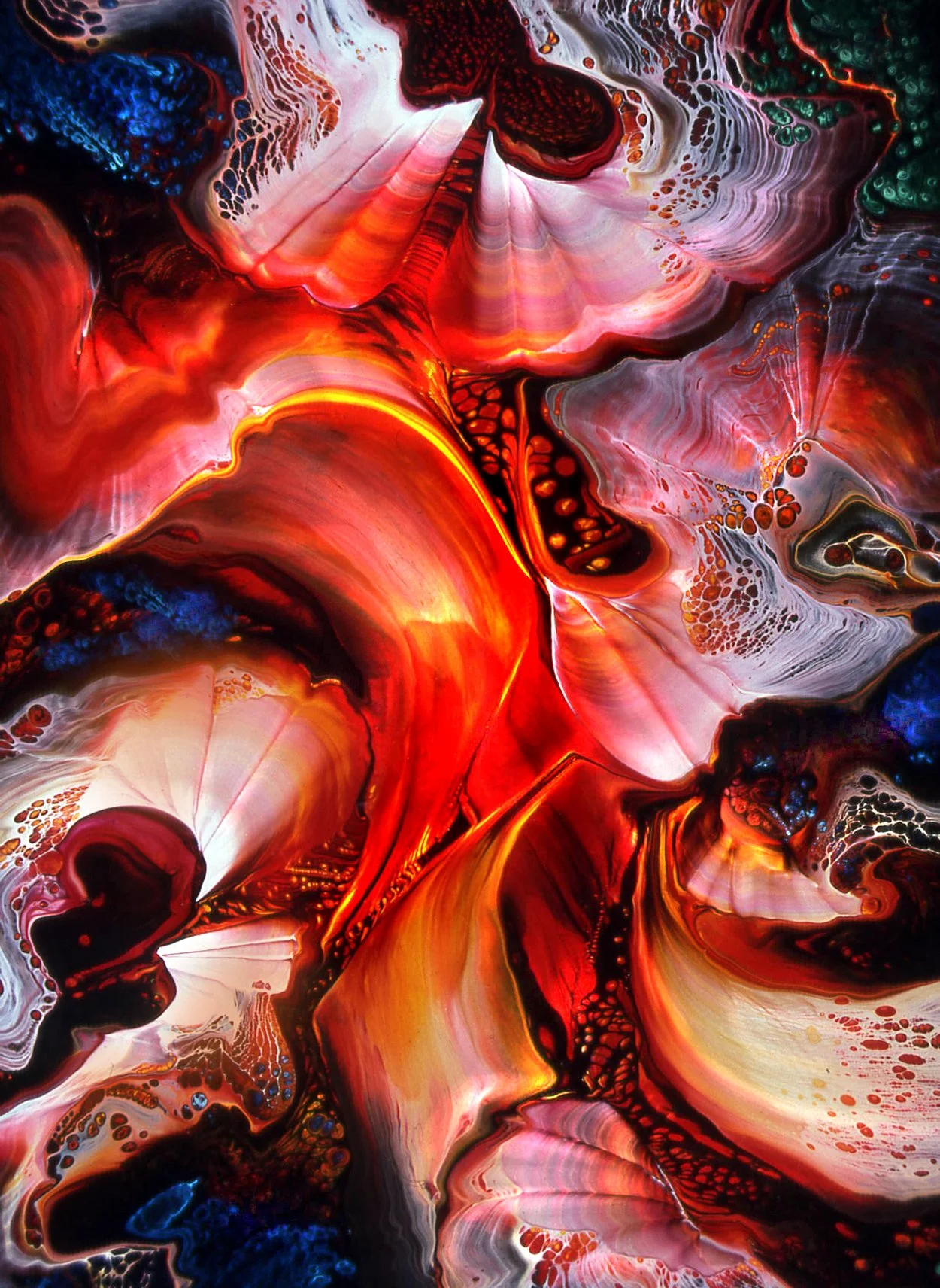
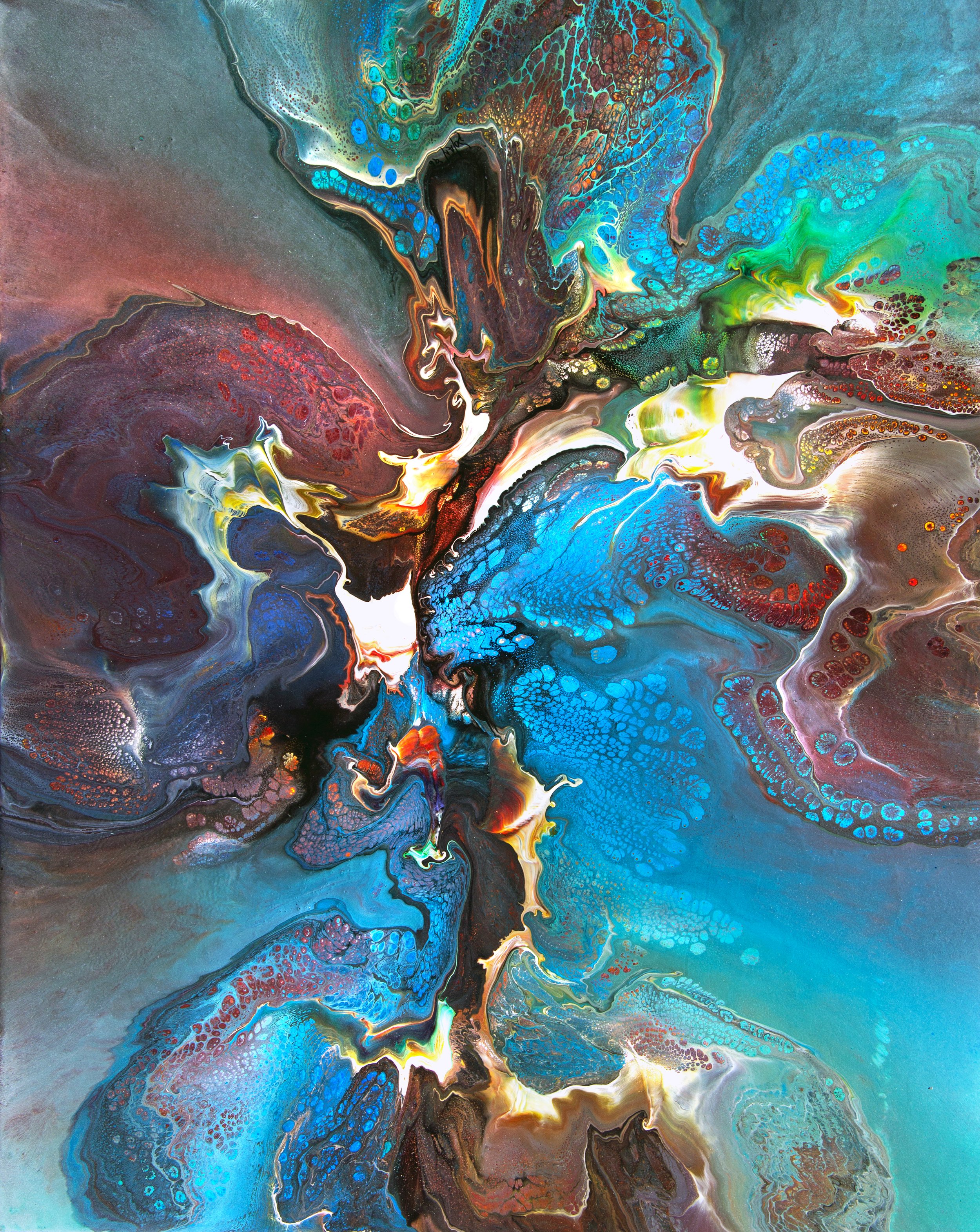
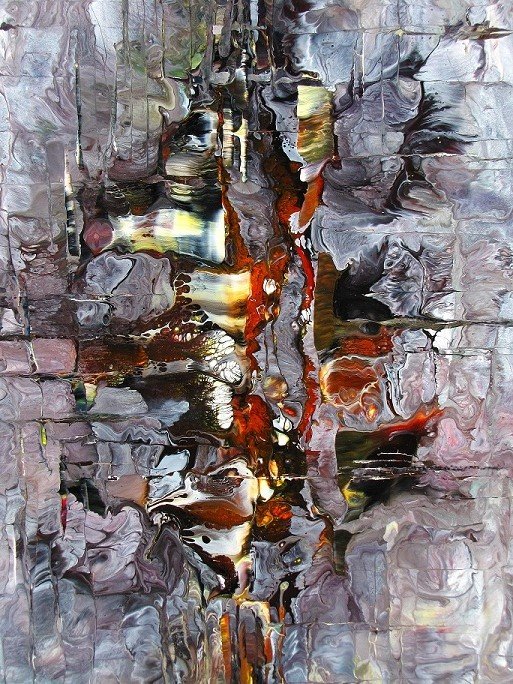
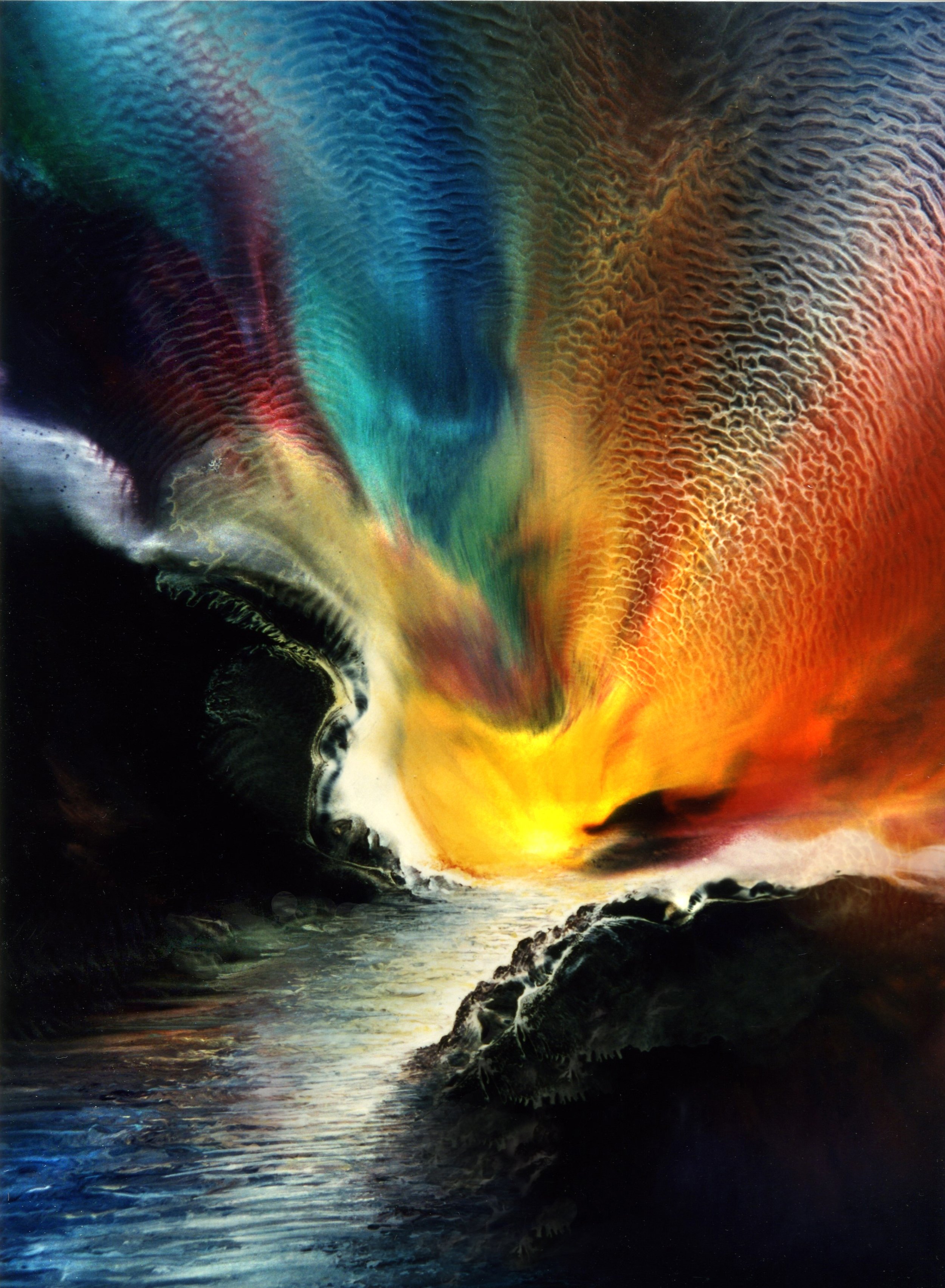
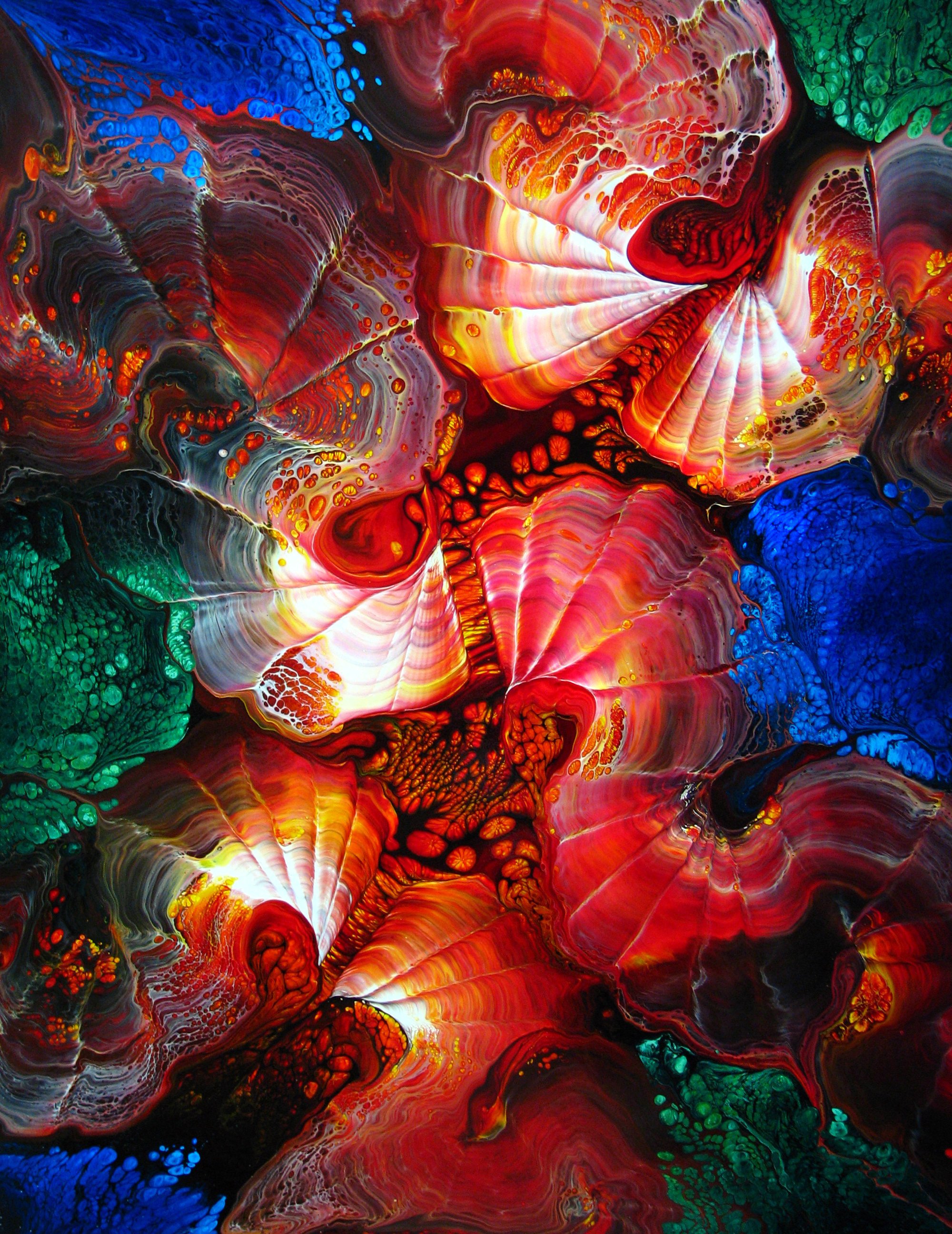
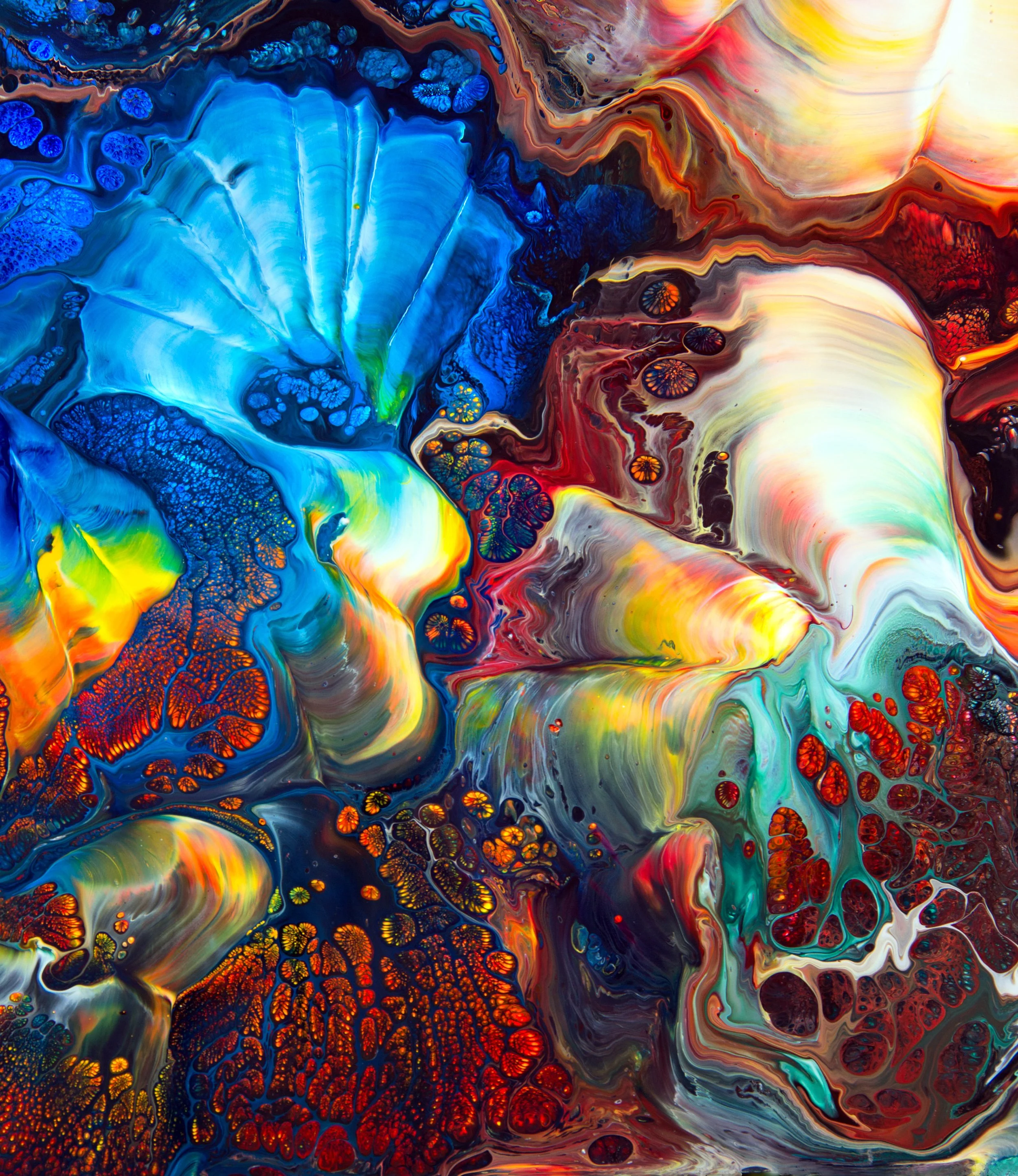
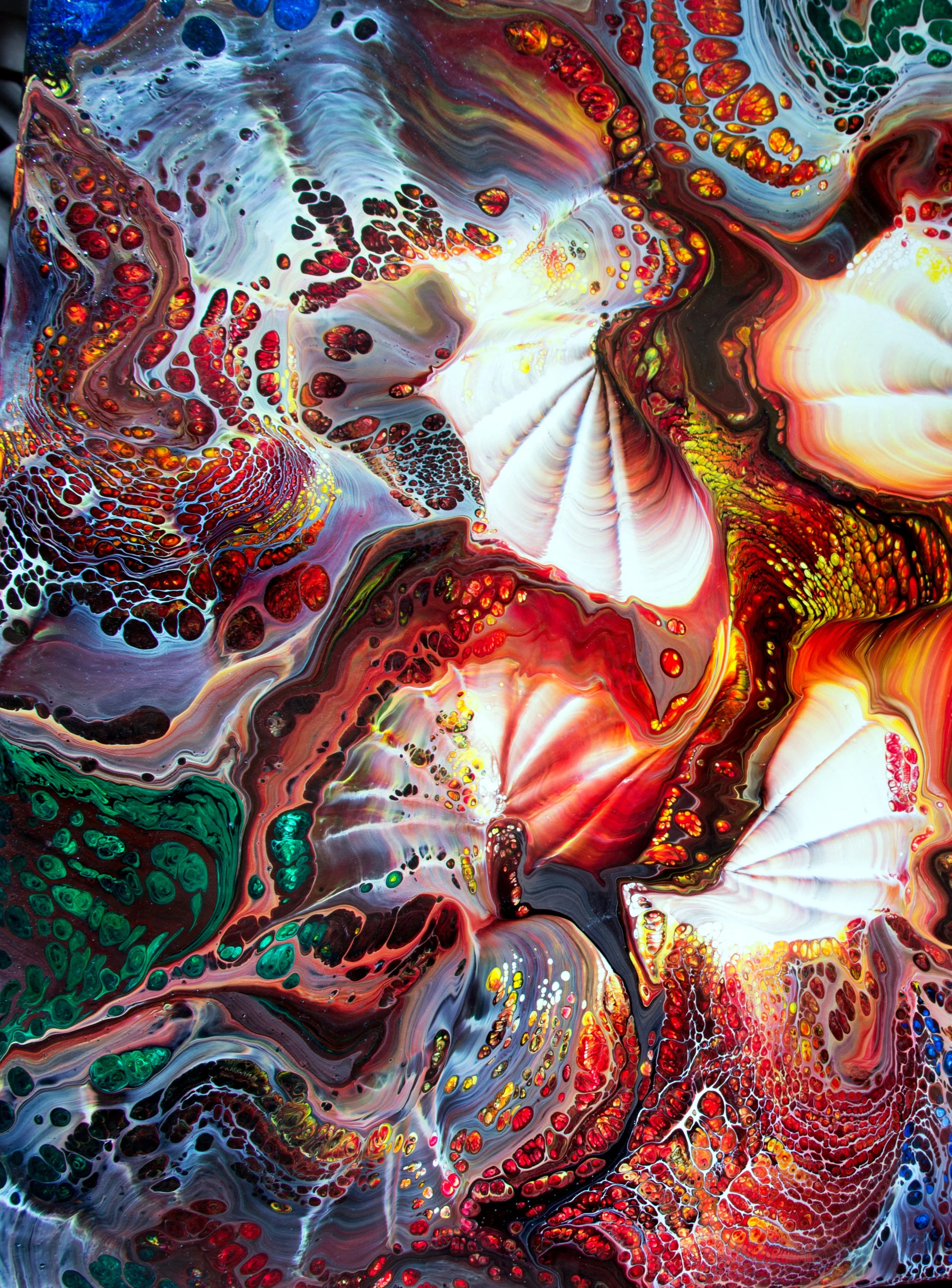
These pigments had properties that allowed for the layering of transparent colors in a way that created exceptional depth and refraction of light.
This unique three dimensional aspect can only be appreciated when viewed in person.
Prints and reproductions have never been able to adequately recreate the experience.
While no longer selling publicly he retains a substantial personal collection available privately.
Historical Significance
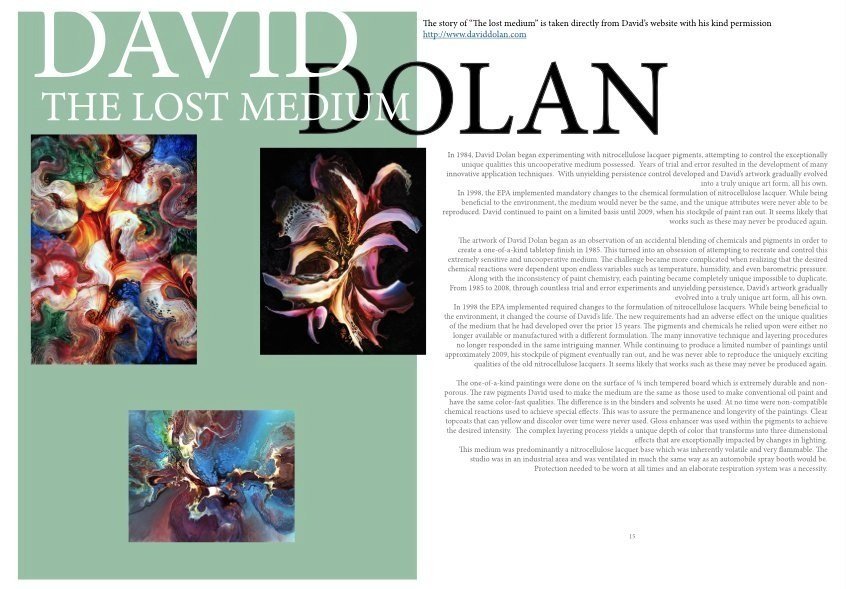
In 1984 David Dolan began experimenting with nitrocellulose lacquer pigments, attempting to control the exceptionally unique qualities this uncooperative medium possessed. Years of trial and error testing and the developing of many innovative application techniques were to follow. With unyielding persistence, Davids artwork gradually evolved into a truly unique art form all his own
David Dolan’s lacquer paintings occupy a very unusual place in the history of painting because they combine an industrial material, a chemical process, and abstract painting in a way that almost no artists have explored deeply.
1. Traditional Lacquer Art Is Completely Different
Historically, lacquer painting has been dominated by Asian lacquer traditions developed over thousands of years in China, Japan, Vietnam, and Korea. In those traditions:
• Natural tree resin (urushi) is used
• Artists carve, polish, and inlay materials like gold, shell, or pigment
• The aesthetic tends toward precision, and controlled imagery
In contrast, Dolan’s work:
• Uses nitrocellulose lacquer, a modern industrial coating
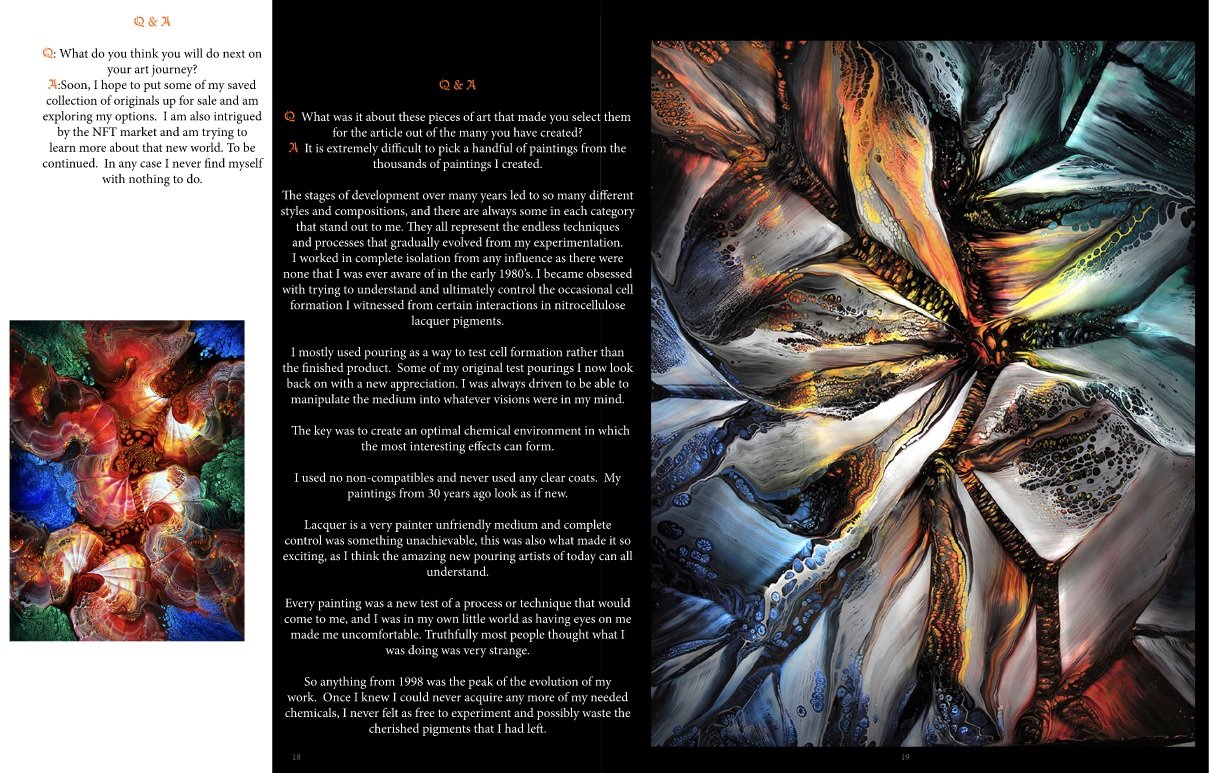
• Allows fluid chemical reactions to generate forms
• Many thin transparent pigment layers are utilized
• Uses accelerators and retarders for control
• varies viscosities and evaporation rates to promote cell formation
This places the work outside the historical lacquer tradition
Dolan’s body of work is not part of a broader movement. It does not replicate an existing aesthetic lineage. It exists as a self-developed, technically isolated practice.
In a contemporary art landscape often driven by trend, replication, or conceptual alignment, Dolan’s practice is defined by singularity. The absence of external influence became the foundation of his originality. Because he worked in isolation, his visual vocabulary evolved without comparison or imitation. What emerged is a discipline that cannot be easily categorized within minimalism, abstraction, or decorative lacquer tradition.
His lacquer paintings stand as singular artifacts of an era, technique, and artistic vision that may never be seen again.
What is Nitrocellulose Lacquer
Nitrocellulose lacquer is a fast-drying coating made from nitrocellulose, a chemically treated form of cellulose (the natural fiber found in cotton or wood pulp), dissolved in solvents and mixed with plasticizers and resins. When applied to a surface, the solvents evaporate quickly, leaving behind a hard, transparent film.
Nitrocellulose is created by treating cellulose with nitric and sulfuric acids. This process converts the natural fiber into a highly reactive polymer that can dissolve in solvents. Once dissolved, it forms a highly flammable, and volatile product.
Unlike oil or acrylic paint, which cure through chemical reactions, nitrocellulose lacquer dries purely through solvent evaporation. This means new layers can partially dissolve and fuse with earlier ones.
Nitrocellulose lacquer has several characteristics that make it distinct:
1. Extremely fast drying
Layers can dry in minutes rather than hours or days.
2. Layer fusion
Each new coat slightly re-melts the layer beneath it, allowing layers to bond into a single unified surface.
3. Optical depth
Multiple layers can create remarkable transparency and internal light reflection, producing luminous three dimensional visual depth.
TheMaterials
The one of a kind paintings were done on the surface of ¼ inch tempered board which is extremely durable and non-porous. The raw pigments David used to make the medium are the same as those used to make conventional oil paint, and have the same color-fast qualities. The difference is in the binders and solvents he used. At no time were non-compatible chemical reactions used to achieve special effects. This was to assure the permanence and longevity of the paintings. Clear topcoats that can yellow and discolor over time were never used. Gloss enhancer was used within the pigments to achieve the desired intensity. The complex layering process yields a unique depth of color that transforms into three dimensional effects that are exceptionally impacted by changes in lighting.
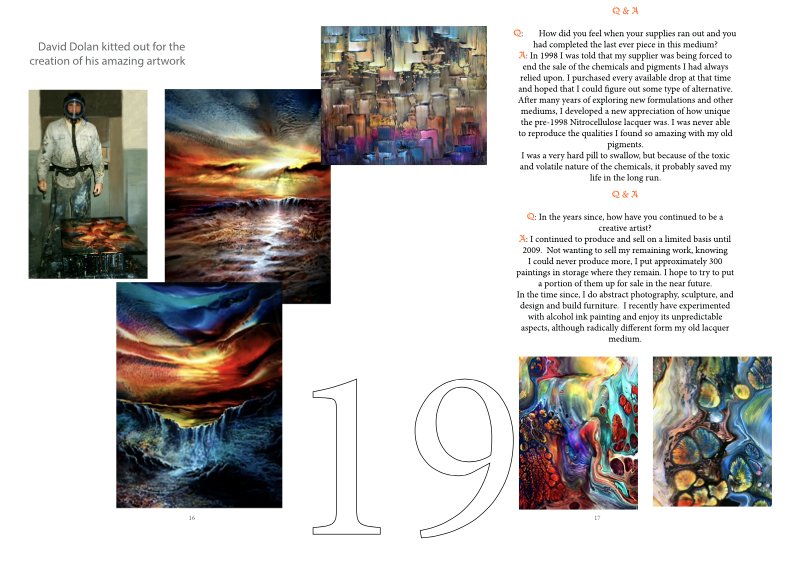
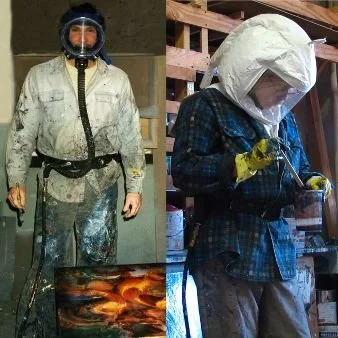
This was an inherently volatile and flammable medium. The studio was in an industrial area and was ventilated in much the same way as an automobile spray booth would be. Protection needed to be worn at all times and an elaborate respiration system was a necessity.